Tel: 07764254881
Gower Acupuncture
  • Home
  • Pain
    • Headache & Migraine
    • Back Pain
    • Stress & Anxiety
  • Booking & Cost
  • About Tim
    • Reviews
    • Acupuncture Treatment Details
  • Contact
  • News
  • Click to open the search input field Click to open the search input field Search
  • Menu Menu

What actually happens during an acupuncture session?

August 25, 2026/0 Comments/in Uncategorized/by Tim W

What actually happens during an acupuncture session?

Many people arrive for their first appointment slightly nervous — especially if they dislike injections or have never had acupuncture before. There’s no need though…

The first session begins with a conversation about your pain, your general health, sleep, stress levels, energy, and anything that seems to aggravate or relieve your symptoms, followed by a physical assessment, where appropriate. This helps me build a fuller picture of what may be contributing to the pain so I can develop a treatment plan.

Treatment itself is typically very gentle. I always start gently and work up in intensity – always working with you, rather than telling you what’s going to happen. Acupuncture is all about balance. At a micro level, I’m mildly stressing your system to help rebalance it. Too much “stress” and you’ll ache after treatment. Not enough “stress” and nothing changes. A skilled acupuncturist is always assessing and modifying treatment intensity to get the best results. Stronger treatment is overwhelmingly not the best treatment.

The needles used in acupuncture are extremely fine — much finer than those used for blood tests or injections.The needles I use are 0.2mm wide. Most people feel very little as the needles are inserted. Occasionally there may be a brief tingling, warmth, heaviness, or dull ache around a point, which is completely normal.

Once the needles are in place, many people find the treatment surprisingly relaxing. Some even fall asleep during the session.

Appointments are always adapted to the individual. Some people come in with long-standing back pain, others with neck tension, migraines, stress-related symptoms, or pain that has persisted despite trying multiple other approaches.

You don’t need to “believe” in acupuncture for it to be worth exploring. In fact I’ve had vets and animal owners who have come to me after seeing the changes their horse or dog have undergone post acupuncture. Most people simply come because they want to feel better and regain some quality of life.
When NOT to Book an Acupuncture Appointment

August 18, 2026/0 Comments/in Pain/by Tim W

Don’t Book Acupuncture if…

When you shouldn't go for acupuncture
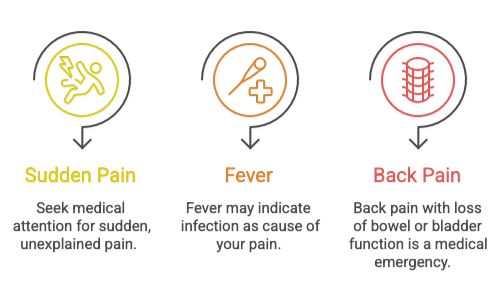
Acupuncture is amazing for pain relief. But its not magic. It’s also not the right treatment for all pain. Here are some instances when your GP or A&E may more appropriate than the acupuncture clinic..

  • New onset of unexplained pain with fever or temperature
  • Back pain and loss of control of bowel and/or bladder function
  • Sudden onset pain with nausea, dizziness, rapid pulseAcupuncture tends to be very effective for chronic pain and is recommended by NICE for treatment of primary chronic pain. The general rule is that if you get a sudden onset of new pain, with or without accompanying symptoms its best to get it checked out by your Dr first or go to A&E, especially if it’s unusual  and unexplained.

Why is Back Pain so Stubborn

August 11, 2026/0 Comments/in Uncategorized/by Tim W

Why is back pain so stubborn?

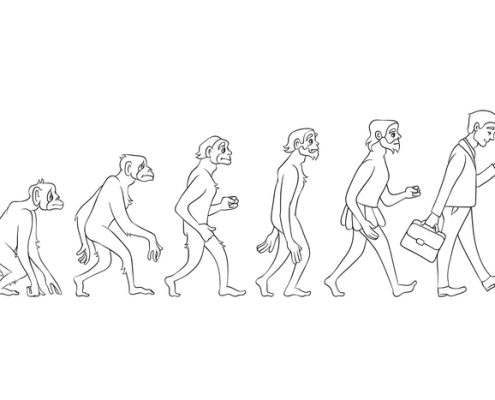
Having evolved from monkeys, back pain is sometimes atributed to “the price we pay for walking upright”. Having evolved fairly rapidly from walking on all fours to upright our spines aren’t perfectly adapted to the relatively new job of standing upright. Add to that our mostly sedentary, tech based postures and you’ve got the perfect catalyst for back pain. You’re not alone. Over half (60%) of the population will have back pain at some time in thier lifetime.

Evolution of back pain

What’s the solution?

You may have already tried massage, osteopathy, physiotherapy, stretching exercises and multiple medical appointments. Frustratingly, sometimes scans and tests don’t fully explain the level of pain you’re experiencing.

If you go to your doctor with back pain you’ll more than likely get a diagnosis of “non-specific” lower back pain. This is the majority diagnosis. Approximately 90% of lower back pain is diagnosed as non specific. Non-specific is a technical term meaning “we’re not quite sure what’s going on”.

So What Could Be Causing Your pain?

Fascia

Fascia is a thin layer of connective tissue, like a sausage skin, that sits under the skin and holds everything together. Its everywhere, all through the body.

Fascia is an important part of our structure.  Most human fascia contains approximately 250 million nerve endings. Roughly the same as you’ll find in skin. If you suffer from chronic pain the number of these nerve fibres that sense pain can grow. Studies in rats have suggested the amount of nerve fibres may almost triple, which may explain why it can be so difficult to treat chronic pain. Its thought that chronic inflammation causes the proliferation of these nerve fibres.

Initial research suggests that the sympathetic nervous system (responsible for the fight or flight mechanism) may trigger inflammation in the fascia, causing it to stiffen and compound the problem. Could it be then that fascia is responsible for a large part of the 90% of “non-specific” lower back pain? Scientifically this can’t be answered yet, but maybe.

Muscle

Muscular pain tends to be dull and achey, and gets worse when you use the affected muscle. Trigger points are taught bands in muscle that can refer pain to a different area. For example sometimes tightness in abdominial muscles can refer a dull pain into the back. Tight muscles don’t show up on a scan and seem to be often overlooked by primary care physicians.

Trapped Nerve

Nerve pain tends to be different to muscular pain; sharp, shooting, numb and tingling. When a nerve is compressed (or trapped) pain can refer down along the nerve pathway. Nerve compression from bony structures can be picked up from x-rays. Other compression, from muscular tension, are not picked up on  on x ray and may be diufficult to discern on some MRI scans.

Certain nerves exiting the spine can become trapped by paraspinal muscles, referring pain forward to the flanks and even to the front of the body into the abdomen. Damage to the muscle can cause inflammation and swelling that can then trap the nerve.The result is neuropathic pain from a muscular origin.

Viscera

Viscera are the organs. They don’t tend to have many intrinsic nerve fibres and can refer pain to other parts of the body. The most well known pain refrral pattern is pain into the shoulder, upper back and arm from dysfiunction of the heart. The kidneys can refer pain into the lower back to the hips and groine area. The bladder causes pain even lower around the sacrum. Liver, gall baldder and pancreas dysfunction result in mid back pain. Visceral pain does not tend to change with movement.

It can be difficult to differentiate visceral pain from somatic pain. It may be more diffuse, have other signs of autonomic nervous system involvement (rapid breathing, sweating, heart rate changes, nausea) and the pain may not vary so much with movement.

Central Sensitisation

When pain persisists for over 12 weeks it becomes chronic. The misery of chronic pain can cause the brain to become over-alert, hyper-sensitive and on the look out for any pain signal. When it finds these signals it amplifies them. Making you more miserable and therefore more alert to pain signals.

The nervous system itself can then become overprotective and sensitised. This is one reason chronic pain can continue even after tissues have healed. Chronic pain is more than just pain. It not only dominate your senses but also your mood, inducing depression, anxiety and stress.

If you’re living with pain and looking for a more natural, supportive way forward, I’d love to help.

Calendar Calendar Book Free 15 Minute Consultation


Link Between MRI results & Pain

August 5, 2026/0 Comments/in Pain/by Tim W

The link between MRI Results and Pain

If you have a flair up of acute back pain you want to know whats going on and you want it treated, preferably with some form of MRI or X-ray.

But, numerous studies have now cut the link between MRI results and back pain. Ninety percent of 70 year olds in a 2015 study involving MRI had damage to the discs in their spine. Yet none of these patients had back pain. If you think that’s an inevitability of ageing you’d be right. But this ageing starts young – 52% of 30 years olds in this study had disk damage also.

This isn’t a fringe study either. One of the first studies looking at MRI findings and pain was carried out in 1995 by the New England Journal of Medicine. It took 98 healthy, pain free people and MRI’d their backs. Again, 52% presented with disk protrusion or some level of degenerative change in the spine.

The British Association of Spine Surgeons agree “Magnetic Resonance Imaging Scans (MRI scans) give a very clear picture of the structure of the spine. It does not tell the doctor why the spine is painful. In 85% of patients we are unable to say why back pain occurs” (http://www.spinesurgeons.ac.uk/…/the-spine-and-mri…)

So If Not MRI, then What?

if you’re in your 50’s or 60’s and have an MRI it would be unusual for you not to have an MRI report that mentioned some degenerative changes in the spine. This isn’t a reason to worry. If you have back pain, often it can be more informative to check range of movement, strength and sensitivity to pressure on all the structures in and adjacent to the area of pain. Acupuncture treatment can frequently alleviate the pain.

What To expect From Acupuncture Treatment

Outcomes for treatment can vary. Acupuncture is a treatment tailored to the individual . An individuals circumstance affects the duration and outcome of treatment. I have treated some patients with recent onset (acute) back pain and resolved it within 3 treatments. At the other end of the spectrum I have treated patients with significant nerve damage. With these patients, acupuncture is often an ongoing weekly treatment which manages the pain, rather than eliminating it.

These two patient profiles are outliers. Most patients I see typically need 4-8 sessions, depending on age, fitness, length of time with back pain and severity of symptoms. The general rule of thumb is that the younger, healthier and less time you have been suffering the quicker it is to treat.

Calendar Calendar Book Free 15 Minute Consultation
Search Search

Recent Posts

  • What actually happens during an acupuncture session?
  • When NOT to Book an Acupuncture Appointment
  • Why is Back Pain so Stubborn
  • Link Between MRI results & Pain
  • Stubborn headaches that just won’t go… Unusual Headache Cures…

Recent Comments

    Archives

    • August 2026
    • July 2026
    • April 2026
    • March 2026
    • January 2026
    • October 2025
    • September 2025
    • August 2023
    • June 2017
    • September 2015

    Categories

    • Headache
    • Health & Immunity
    • Pain
    • Stress & Anxiety
    • Uncategorized

    Contact Details

    Gower Acupuncture
    26 Newton Road
    Mumbles
    SA3 4AX

    Tel: 07764 254881

    Email: tim@goweracupuncture.co.uk

    Follow me on Facebook

    Accesibility

    See our accesibility statement here

    Privacy Policy

    See privacy policy details here

    Sitemap

    • About Tim
      • Acupuncture Treatment Details
      • Testimonials
    • Contact
    • Cookie Policy
    • Home
    • News
    • Pain
      • Back Pain
      • Headache & Migraine
      • Stress & Anxiety
    • Pricing
    • Privacy Policy
    copyright - Gower Acupuncture 2026 - Enfold Theme by Kriesi
    • Link to Facebook
    Scroll to top Scroll to top Scroll to top
    Manage Consent
    To provide the best experiences, we use technologies like cookies to store and/or access device information. Consenting to these technologies will allow us to process data such as browsing behavior or unique IDs on this site. Not consenting or withdrawing consent, may adversely affect certain features and functions.
    Functional Always active
    The technical storage or access is strictly necessary for the legitimate purpose of enabling the use of a specific service explicitly requested by the subscriber or user, or for the sole purpose of carrying out the transmission of a communication over an electronic communications network.
    Preferences
    The technical storage or access is necessary for the legitimate purpose of storing preferences that are not requested by the subscriber or user.
    Statistics
    The technical storage or access that is used exclusively for statistical purposes. The technical storage or access that is used exclusively for anonymous statistical purposes. Without a subpoena, voluntary compliance on the part of your Internet Service Provider, or additional records from a third party, information stored or retrieved for this purpose alone cannot usually be used to identify you.
    Marketing
    The technical storage or access is required to create user profiles to send advertising, or to track the user on a website or across several websites for similar marketing purposes.
    • Manage options
    • Manage services
    • Manage {vendor_count} vendors
    • Read more about these purposes
    View preferences
    • {title}
    • {title}
    • {title}