Tel: 07764254881
Gower Acupuncture
  • Home
  • Pain
    • Headache & Migraine
    • Back Pain
    • Stress & Anxiety
  • Booking & Cost
  • About Tim
    • Reviews
    • Acupuncture Treatment Details
  • Contact
  • News
  • Click to open the search input field Click to open the search input field Search
  • Menu Menu

Stubborn headaches that just won’t go… Unusual Headache Cures…

July 28, 2026/0 Comments/in Uncategorized/by Tim W

Getting stubborn headaches that just won’t go? Heal yourself with some left-field cures you may never heard of before…


Omega 3

Omega 3 fatty acids – as found in fish oils. Scientific reviews suggest there is moderate evidence to suggest the therapeutic role of omega 3 in treating headaches, most probably by reducing inflammation (https://www.ncbi.nlm.nih.gov/pmc/articles/PMC7572026/). Interestingly the same studies suggest that omega 6 induces an inflammatory response. So try to reduce intake of seeds, nuts, poor quality meat, dairy, sunflower or corn oil and up your intake of omega 3 fish oils if you want to reduce inflammation. There are very few contra-indications other than the risk of bleeding at high doses beyond 3 grams per day.

Creatine Monohydrate

Beloved  by weight-lifters to bulk up muscle. Low creatine levels have been found in the thalamus of brains of some migraine sufferers. This suggests that taking creatine as a supplement may increase these endogenous creatine levels and reduce symptoms of migraine. It’s important to remain hydrated when taking creatine. If not , perversely, you may get a headache caused by dehydration from the creatine.

Turmeric

A potent anti-inflammatory. So potent that there are some caveats. Don’t take too much if exercising as you’ll not benefit from the inflammatory phase of exercise. Turmeric can also affect clotting, acting as a blood thinner. This may be an issue if you’re already on blood thinners such as warfarin. Or it may be an added bonus as it may also help protect against heart disease (https://www.ncbi.nlm.nih.gov/pmc/articles/PMC8833931/) due to its anti-inflammatory and anti-oxidative properties.

Muscular Tension

Numerous muscles can cause headache. Typically tension from neck muscles refers pain on to the head. What makes this difficult to diagnose is that for some muscles you can’t feel any pain in the neck, just the head. Whilst there are numerous culprits the most prolific muscle is the upper trapezius. This tends to refer to the back of the head and when its really thumping, onto the front of the head as well. To check if this muscle could be contributing to your headaches try pinching the muscle that slopes down from your neck to your shoulder.

Sleep

Numerous bad things come from not getting enough sleep; poor memory & cognitive function, compromised immune system, poor tissue repair, depression. Increased feelings of sleepiness may also predispose you to poor diet choices – reaching for high glucose foods to give you an instant energy boost, which could lead to a lack in the following essential nutrients.

Vitamin B12

Vitamin B12 deficiency can lead to demyelination of nerve sheaths (essentially damaging the nerves), mimicking symptoms of MS; weakness, tiredness, numbness and tingling, depression. Up to 20% of the elderly are estimated to be vitamin B12 deficient. Check you are eating enough B12 rich foods (red meat, fish, shell fish, fortified soy products, dairy).

Vitamin D

Spend a lot of time indoors? Symptoms get worse in the winter? Don’t eat much in the way of fish, eggs or diary? Perhaps you have a Vitamin D deficiency. Particularly important to check out given that Vitamin D deficiency has been associated with increased risk of cancer.

Magnesium

Magnesium is an essential electrolyte, Its a macro nutrient meaning its needed in large quantities. It’s a nutrient important for proper muscle and nerve function, allowing muscles to relax. Deficiency can result in muscle weakness, twitching, dizziness, nausea and irritability. It can even be the root cause of low calcium or potassium levels.
Magnesium is also critical for production of the feel good hormone serotonin. Low levels can be responsible for depression. Requirements will rise for magnesium if you’re doing hard physical work, are under emotional stress or taking certain medications such as chemotherapy, anti- fungals, medications for infections and others. In trials magnesium tends to work best for migraine and menstrual headaches.
Bananas, avocados, nuts, dark green leafy vegetables and dark chocolate all contain high levels of magnesium.

Stress & Anxiety

Stress is a common trigger for both tension type headaches and migraine. So lowering stress and anxiety should be an integral part of your plan to get better. In brief; exercise, breathing exercises, connecting emotionally with others, reframing apparently negative events into positives and meditation can all help.

This is a far from exhaustive list of potential culprits. I haven’t even covered environmental toxins, bowel function, other nutrients such as riboflavin, thiamine, co-enzyme Q10, carnitine (from meat products) or niacin. As you may have gathered pinning down the cause of your headache and fixing it is no easy solution. And some solutions contradict others. For example lowering your omega 6 intake by eating fewer nuts may then adversely impact your magnesium levels.

Thankfully acupuncture is effective at treating a great deal of headaches and migraines without the need for a radical dietary overhaul. If you’d like to see if I can help please book a free 15 minute on the following button…

Calendar Calendar Book Free 15 Minute Consultation

The Misery of Migraine & Headache.. and what to do about them

July 22, 2026/0 Comments/in Headache/by Tim W

The Misery Of Migraine & Headache… and what to do about them
headache diagram

Migraine covers a multitude of symptoms from one-sided head pain, aura and light sensitivity, nausea, vertigo & dizziness and even unilateral paralysis and weakness.

The first step in trying to remedy migraine is trying to unearth the cause. These can be primary or secondary. Secondary migraine or headache result from another disease or condition. Primary headaches means there is no underlying disease process, the headache is a result of issues with pain sensitive structures in the head.

Primary Headache

Muscular tension

Trigger points in muscles can cause an astonishing array of symptoms ranging from pain in the head mimicking migraine to dizziness, sinus pain and tinnitus. In 1998 researchers discovered a connection between a small muscle in the neck (rectus capitis posterior minor) and the pain sensitive dura matter that surrounds the brain and spinal cord. When this muscle is tight it pulls on the dura and creates pain in the head.

Since 1940’s Dr Janet Travell (President JFK’s physicians, no less) has advanced the work of trigger point therapy, finding numerous other relationships between muscular tension and pain in the head. The main tenant of “trigger point” being that tightness in a muscle can refer pain into another part of the muscle or into another area entirely.

Nutritional deficiencies

Vitamin D. Spend a lot of time indoors? Symptoms get worse in the winter? Don’t eat much in the way of fish, eggs or diary? Perhaps you have a Vitamin D deficiency. Particularly important to check out given that Vitamin D deficiency has been associated with increased risk of cancer.

Vitamin B12. Vitamin B12 deficiency can lead to demyelination of nerve sheaths (essentially damaging the nerves), mimicking symptoms of MS; weakness, tiredness, numbness and tingling, depression. There are two aspects to B12 deficiency.

1) Not eating enough B12 rich foods (red meat, fish, shell fish, fortified soy products, dairy).

2) Not absorbing nutrients efficiently. In this case B12 injections are often needed.

Calcium. Calcium deficiency can cause a variety of symptoms; muscle spasms and cramps, numbness and tingling, brittle nails and confusion and memory loss. Its a common myth that dairy is the only source of calcium. In contrast greens such as broccoli and kale are excellent sources, as are sardines and almonds. Sufficient vitamin D is needed to effectively absorb calcium.

Magnesium. Magnesium is an essential electrolyte, important for proper muscle and nerve function. Deficiency can result in muscle weakness, twitching, dizziness, nausea and irritability. It can even be the root cause of low calcium or potassium levels.

Sleep Apnea

Poor breathing during sleep can lead to lower blood oxygenation levels. Low levels of oxygenation equals low energy and can contribute to migraine. If you have to drag yourself out of bed in the morning, find yourself tired and lifeless you may be suffering sleep apnea. Its worth checking your blood oxygenation either with a monitor at home (bearing in mind these devices are not hugely accurate) or via a blood test.


Secondary Headache

When looking at secondary migraine you’re essentially ruling out the scary (and quite often the least likely) causes:

Tumour

A rare cause of headache – but well worth ruling out, for peace of mind. A CT or MRI scan can detect tumours. Typically the headache will be recent. There may be changes in behaviour, memory recall and persistent nausea and vomiting – rather than the fleeting bouts symptomatic of migraine. Unfortunately many symptoms of tumour are very similar to symptoms of migraine.

Aneurism & Haematoma

Feeling sick, stiff neck, double vision, seizures, weakness on one side of the body. Unfortunately these symptoms again can mimic migraine.

Carotid artery Disease

The carotid artery is the main artery in the neck. Narrowing of this artery can cause visual & light disturbances with symptoms similar to migraine.

High Blood Pressure

High Blood pressure can put extra tension on sensitive blood vessels causing extreme headaches. If you’re also having problems breathing, feel fatigued, have chest pains and pounding in neck and ears you may have hypertension.

Low Blood pressure

Low Blood Pressure can lead to inadequate blood supply to the muscles around the neck and head and can lead to poor supply to the brain.

Both high and low blood pressure can be easily checked by your GP.

Hypothyroid

Fatigue, weight gain and hair loss in combination with headaches may point to low thyroid function. This is often diagnosed by a blood test with your GP. In some cases you may need further tests under an endocrinologist.


Anything Else Worth Considering – Can Acupuncture Help?

If you want to avoid medication then acupuncture can be a very effective treatment for migraine. Fortunately its also got the seal of approval by NICE (National Institute for Health and Care Excellence) who recommend a course of up to 10 treatments for both migraine and tension headache.

Calendar Calendar Book Free 15 minute consultation

Tension Headache, Trigger Points – What they are, How to Treat them

July 15, 2026/0 Comments/in Headache/by Tim W

Tension Headaches From Trigger Points

Trigger points are areas of tightly contracted irritable muscles. They can occur in muscle, fascia or skin. Research by National Institute of Health has shown that the taut bands contain many pro-inflammatory substances.They typically refer pain or discomfort away from the area that is contracted. For example pushing on the side of the neck can refer pain into the upper chest and down the arm in the case of a dysfunction in a group of muscles called the scalenes.

Trigger points in muscles can cause an astonishing array of symptoms ranging from pain in the head mimicking migraine to sciatica, numbness, dizziness, sinus pain and tinnitus. In 1995 researchers discovered a connection between a small muscle in the neck (rectus capitis posterior minor) and the pain sensitive dura that surrounds the spinal cord. When this muscle is tight it can pull on the dura and creates pain in the head.

Since 1940’s Dr Janet Travell (President JFK’s physicians, no less) has dedicated considerable work to trigger point therapy, finding numerous other relationships between muscular tension and pain in the head. The main tenant of “trigger point” being that tightness in a muscle can refer pain into another part of the muscle or adjacent area.

If your headache gets worse after maintaining a poor posture (working at computer), varies in intensity with stretching or exercise or changes with movement then you may have a headache with muscular tension at its root. The muscles most likely to be causing your headache are listed below. Have a careful prod around. If you get pain or sensitivity when pushing on any of the muscles below you may have found the culprit.

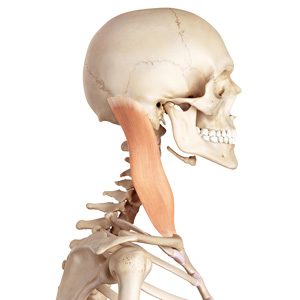
Sternocleidomastoid
sternocleidomastoid muscle

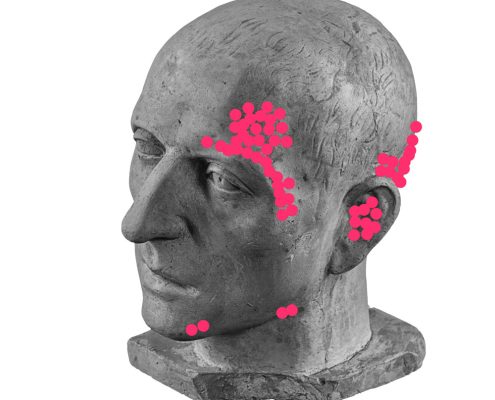
This is a long muscle running diagonally down the neck, crossing from behind the ear at the base of the skull diagonally forward to almost central on the clavicle (collar bone). Take a look in the mirror – rotate your head to the left (as if reversing in the car). Your right Sternocleidomastoid will become more prominent. Whilst it maybe fairly easy to see its not the easiest to feel. Don’t push too deep because there are numerous delicate structures in close proximity – carotid artery, jugular vein, vagus nerve and lymph nodes. Pain can be felt over the front of the head. Due to its function of keeping the head level it can be responsible for a dizzying array of symptoms – literally – including dizziness, tinnitus, stuffiness in the ear and feelings of nausea.

SCM pain referral pattern

SternoCledioMastoid (SCM) muscle pain referral pattern

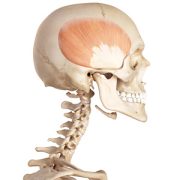
Temporalis

Temporalis Muscle

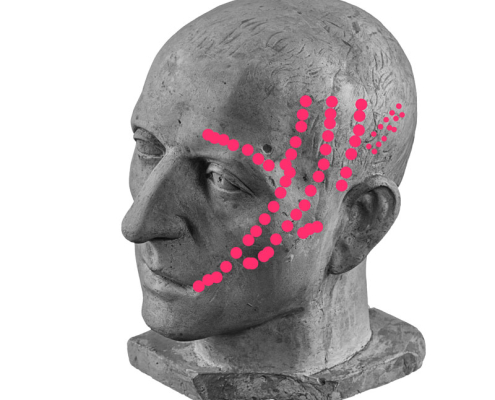
Imagine a big circle, diameter a couple of inches, situated further back on the head between (and slightly higher than) your eye and ear. This is the temporalis. It’s a big flat muscle responsible for chewing motion of jaw. If you chew gum or grind your teeth deactivating this muscle may help your headache. This is a tricky one to feel for as the muscle is so thin. It needs to be as its on the side of your head. Anyway, clamp your jaw down and try to feel for the contraction of the muscle. If you feel pain around this area and down into the jaw area and over the eyebrow you have found part of your problem

Temporalis pain referral pattern

Temporalis pain referral pattern

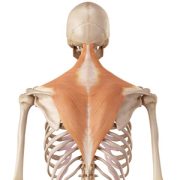
Upper Trapezius

Trapezius muscle

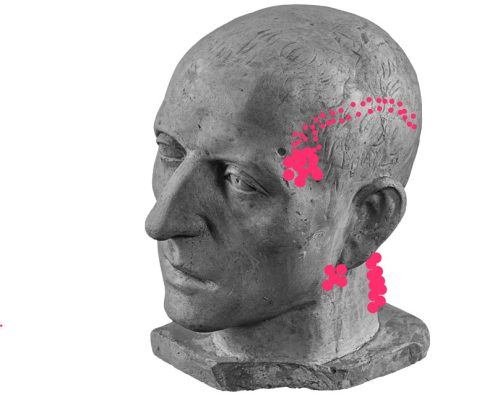
This is the triangle that bridges from your neck down to your shoulders. Its an important muscle for maintaining an erect posture. It helps to raise the shoulders when shrugging, laterally flex the neck (put ear onto the shoulder) and extends the neck (as in looking up). Pinch across the sloping ridge from neck to shoulder. This is tender on a lot of people. Upper trapezius headaches typically refer pain onto the eyebrow area on the front of the head. This is a muscle thats easy to feel for and easy to self massage.

Upper trapezius pain referral pattern

Upper trapezius pain referral pattern

Sub Occipitals

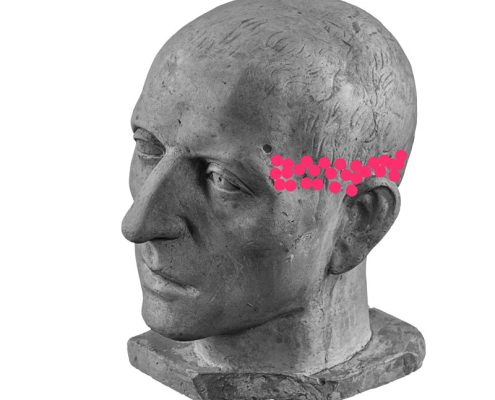
These muscles sit under the occiput (base of the skull at the back of the head). They are a group of muscles primarily responsible for rotating (turning) and extending (looking up into the sky) the head. Pain from these muscles typically refers pain forward between the level of the upper part of the ear and the eye in a band round the head. Reach back and have a feel under the skull at the back of the head. Be aware though that the back of the head is a congested area full of many other muscle insertions that could be causing a very different type of headache.

Sub-occipitals pain referral pattern

Sub-occipitals pain referral pattern

Superior Oblique

This muscle sits behind the eye and is responsible for moving the eye. Look up and to the outside of your head and you’ll be stretching this muscle. If doing this replicates your headache its likely you’ll need to start be being a bit kinder to your eyes. Pain from this muscle tends to be felt deep behind the eye.

This is by no means an exhaustive list and it also bear in mind that these muscles rarely work in isolation. Dysfunction in one muscle can affect other nearby muscles causing a propagation of pain. Acupuncture is great for treating tension headache. Book in for a free 15 minute consultation below.

Calendar Calendar Book Free 15 Minute Consultation


Acupuncture For Hayfever in Swansea

July 1, 2026/0 Comments/in Health & Immunity/by Tim W

Acupuncture for hayfever in Swansea

Person in space suit to stop pollen entering nose

I used to dread the run into Summer. From May until September I would suffer badly with hay fever. For 3 decades it stalked me; sneezing, running nose, itchy eyes I got it all. At school I struggled to concentrate and was in a minority of one who who always had a handkerchief in their pocket – much to the amusement of my friends. I went under the surgeons knife twice in an effort to effect a cure before being told aged 8 I had hay fever.

The symptoms are bad enough but the feeling of irritability just adds to the misery,

Why Irritable?

Histamine is the hormone responsible for mounting attacks on normally inert substances such as pollen that enter the body. In a normal person pollen invokes little or no reaction from the immune system. In a hay fever sufferer an over-production of histamine means that normal reactions don’t occur. The body mounts a full scale attack on the pollen. The sneezing, runny nose and eyes are the body’s attempts to flush out the perceived invader.

The most interesting aspect of histamine from my viewpoint is its impact on emotions. Hormones can have emotional impacts. Seratonin makes you feel good. Oxytocin creates connections and feelings of love. Adrenaline makes you feel alert and excited.

Histamine unfortunately isn’t such a fun hormone. It makes you feel irritated. Anyone who’s suffered from hay fever can probably attest to this. In fact any women out there who have suffered PMS can probably vouch for this as well. PMS has been linked to high histamine levels in the womb.

Acupuncture in Swansea For hayfever

Its not something I treat a lot of in my clinic but it should be as it is surprisingly effective. I treat a number of patients every Spring and am constantly amazed at acupuncture’s efficacy. The best thing about treatment for hayfever is it tends to be a much shorter period of treatment than for pain managemet (3-5 session for most). And after successful treatment the hayfever does not tend to make a re-occurence for years. The results are by no means guaranteed – younger patients (sub 60) tend to fair better. Why not book a free 15 minute consultation, below, to see if I may be able to banish your Summer misery?

Calendar Calendar Book Free 15 Minute Concsult
Thanks to acupuncture, diet and lifestyle changes my symptoms are now vastly reduced. Aside from acupuncture here are some diet/ lifestyle changes that may help…
1. Diet: Try moving towards a diet high in fruit and vegetables and eliminate processed and junk food, including dairy, starch and sugars.
2. Neti Pot/Salt Water Sprays: These can be great for some patients. The mild salt water soothes inflamed mucus linings and can clear out the irritants and excess mucus. Don’t go crazy though. Continual irrigation of the nasal passage can remove mucus membrane designed to protect the nose.
3. Probiotics. These beneficial bacteria are thought to be able to interact with the immune system and modify the response to inert substances. Information on this study can be found here https://www.ncbi.nlm.nih.gov/pmc/articles/PMC3784923/.
4. Head for the sea. We are fortunate living so close to the sea. If the winds are blowing on-shore head to the beach to get some relief from land-borne pollen. If you can’t make it to the beach you may have to stay holed up in your house or sealed in a car with a pollen filter – both not such fun options on a hot summers day.
5. Nasal Sprays: Steroid nasal sprays work by reducing inflammation and swelling. Whilst it was thought that the effects of the steroids were loaclised to the nose and sinuses only, it is worth considering that the effects can spread. Steroids suppress the immune system so should be used with care. Chronic use can lead to lead to side effects including anxiety, hyperhidrosis (excessive sweating), depression and can even affect growth and development in children. (see https://bnf.nice.org.uk/…/beclometasone-dipropionate… for a full list of side effects).
6. Anti-histamines: If you are taking these regularly please take a moment to reflect on a recent US study suggesting chronic use of anti-histamines may increase risk of alzheimers. In particular those people taking daily dose of 1st generation anti-histamines such as chlorpheniramine and diphenhydramine are at highest risk and may want to consider switching to an alternative or looking for another option.
Search Search

Recent Posts

  • What actually happens during an acupuncture session?
  • When NOT to Book an Acupuncture Appointment
  • Why is Back Pain so Stubborn
  • Link Between MRI results & Pain
  • Stubborn headaches that just won’t go… Unusual Headache Cures…

Recent Comments

    Archives

    • August 2026
    • July 2026
    • April 2026
    • March 2026
    • January 2026
    • October 2025
    • September 2025
    • August 2023
    • June 2017
    • September 2015

    Categories

    • Headache
    • Health & Immunity
    • Pain
    • Stress & Anxiety
    • Uncategorized

    Contact Details

    Gower Acupuncture
    26 Newton Road
    Mumbles
    SA3 4AX

    Tel: 07764 254881

    Email: tim@goweracupuncture.co.uk

    Follow me on Facebook

    Accesibility

    See our accesibility statement here

    Privacy Policy

    See privacy policy details here

    Sitemap

    • About Tim
      • Acupuncture Treatment Details
      • Testimonials
    • Contact
    • Cookie Policy
    • Home
    • News
    • Pain
      • Back Pain
      • Headache & Migraine
      • Stress & Anxiety
    • Pricing
    • Privacy Policy
    copyright - Gower Acupuncture 2026 - Enfold Theme by Kriesi
    • Link to Facebook
    Scroll to top Scroll to top Scroll to top
    Manage Consent
    To provide the best experiences, we use technologies like cookies to store and/or access device information. Consenting to these technologies will allow us to process data such as browsing behavior or unique IDs on this site. Not consenting or withdrawing consent, may adversely affect certain features and functions.
    Functional Always active
    The technical storage or access is strictly necessary for the legitimate purpose of enabling the use of a specific service explicitly requested by the subscriber or user, or for the sole purpose of carrying out the transmission of a communication over an electronic communications network.
    Preferences
    The technical storage or access is necessary for the legitimate purpose of storing preferences that are not requested by the subscriber or user.
    Statistics
    The technical storage or access that is used exclusively for statistical purposes. The technical storage or access that is used exclusively for anonymous statistical purposes. Without a subpoena, voluntary compliance on the part of your Internet Service Provider, or additional records from a third party, information stored or retrieved for this purpose alone cannot usually be used to identify you.
    Marketing
    The technical storage or access is required to create user profiles to send advertising, or to track the user on a website or across several websites for similar marketing purposes.
    • Manage options
    • Manage services
    • Manage {vendor_count} vendors
    • Read more about these purposes
    View preferences
    • {title}
    • {title}
    • {title}