

Why is Back Pain so Stubborn
Why is back pain so stubborn?
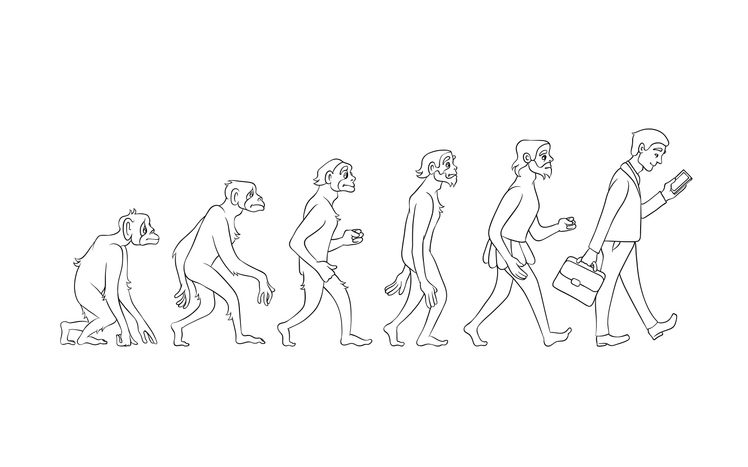
Having evolved from monkeys, back pain is sometimes atributed to “the price we pay for walking upright”. Having evolved fairly rapidly from walking on all fours to upright our spines aren’t perfectly adapted to the relatively new job of standing upright. Add to that our mostly sedentary, tech based postures and you’ve got the perfect catalyst for back pain. You’re not alone. Over half (60%) of the population will have back pain at some time in thier lifetime.
What’s the solution?
You may have already tried massage, osteopathy, physiotherapy, stretching exercises and multiple medical appointments. Frustratingly, sometimes scans and tests don’t fully explain the level of pain you’re experiencing.
If you go to your doctor with back pain you’ll more than likely get a diagnosis of “non-specific” lower back pain. This is the majority diagnosis. Approximately 90% of lower back pain is diagnosed as non specific. Non-specific is a technical term meaning “we’re not quite sure what’s going on”.
So What Could Be Causing Your pain?
Fascia
Initial research suggests that the sympathetic nervous system (responsible for the fight or flight mechanism) may trigger inflammation in the fascia, causing it to stiffen and compound the problem. Could it be then that fascia is responsible for a large part of the 90% of “non-specific” lower back pain? Scientifically this can’t be answered yet, but maybe.
Muscle
Muscular pain tends to be dull and achey, and gets worse when you use the affected muscle. Trigger points are taught bands in muscle that can refer pain to a different area. For example sometimes tightness in abdominial muscles can refer a dull pain into the back. Tight muscles don’t show up on a scan and seem to be often overlooked by primary care physicians.
Trapped Nerve
Nerve pain tends to be different to muscular pain; sharp, shooting, numb and tingling. When a nerve is compressed (or trapped) pain can refer down along the nerve pathway. Nerve compression from bony structures can be picked up from x-rays. Other compression, from muscular tension, are not picked up on on x ray and may be diufficult to discern on some MRI scans.
Certain nerves exiting the spine can become trapped by paraspinal muscles, referring pain forward to the flanks and even to the front of the body into the abdomen. Damage to the muscle can cause inflammation and swelling that can then trap the nerve.The result is neuropathic pain from a muscular origin.
Viscera
Viscera are the organs. They don’t tend to have many intrinsic nerve fibres and can refer pain to other parts of the body. The most well known pain refrral pattern is pain into the shoulder, upper back and arm from dysfiunction of the heart. The kidneys can refer pain into the lower back to the hips and groine area. The bladder causes pain even lower around the sacrum. Liver, gall baldder and pancreas dysfunction result in mid back pain. Visceral pain does not tend to change with movement.
It can be difficult to differentiate visceral pain from somatic pain. It may be more diffuse, have other signs of autonomic nervous system involvement (rapid breathing, sweating, heart rate changes, nausea) and the pain may not vary so much with movement.
Central Sensitisation
When pain persisists for over 12 weeks it becomes chronic. The misery of chronic pain can cause the brain to become over-alert, hyper-sensitive and on the look out for any pain signal. When it finds these signals it amplifies them. Making you more miserable and therefore more alert to pain signals.
The nervous system itself can then become overprotective and sensitised. This is one reason chronic pain can continue even after tissues have healed. Chronic pain is more than just pain. It not only dominate your senses but also your mood, inducing depression, anxiety and stress.
Leave a Reply
Want to join the discussion?Feel free to contribute!