

Tension Headache, Trigger Points – What they are, How to Treat them
Tension Headaches From Trigger Points
Trigger points are areas of tightly contracted irritable muscles. They can occur in muscle, fascia or skin. Research by National Institute of Health has shown that the taut bands contain many pro-inflammatory substances.They typically refer pain or discomfort away from the area that is contracted. For example pushing on the side of the neck can refer pain into the upper chest and down the arm in the case of a dysfunction in a group of muscles called the scalenes.
Trigger points in muscles can cause an astonishing array of symptoms ranging from pain in the head mimicking migraine to sciatica, numbness, dizziness, sinus pain and tinnitus. In 1995 researchers discovered a connection between a small muscle in the neck (rectus capitis posterior minor) and the pain sensitive dura that surrounds the spinal cord. When this muscle is tight it can pull on the dura and creates pain in the head.
Since 1940’s Dr Janet Travell (President JFK’s physicians, no less) has dedicated considerable work to trigger point therapy, finding numerous other relationships between muscular tension and pain in the head. The main tenant of “trigger point” being that tightness in a muscle can refer pain into another part of the muscle or adjacent area.
If your headache gets worse after maintaining a poor posture (working at computer), varies in intensity with stretching or exercise or changes with movement then you may have a headache with muscular tension at its root. The muscles most likely to be causing your headache are listed below. Have a careful prod around. If you get pain or sensitivity when pushing on any of the muscles below you may have found the culprit.
Sternocleidomastoid
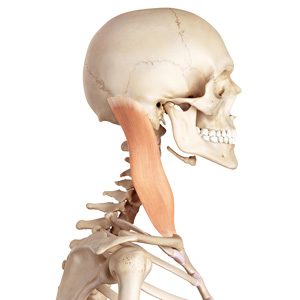
This is a long muscle running diagonally down the neck, crossing from behind the ear at the base of the skull diagonally forward to almost central on the clavicle (collar bone). Take a look in the mirror – rotate your head to the left (as if reversing in the car). Your right Sternocleidomastoid will become more prominent. Whilst it maybe fairly easy to see its not the easiest to feel. Don’t push too deep because there are numerous delicate structures in close proximity – carotid artery, jugular vein, vagus nerve and lymph nodes. Pain can be felt over the front of the head. Due to its function of keeping the head level it can be responsible for a dizzying array of symptoms – literally – including dizziness, tinnitus, stuffiness in the ear and feelings of nausea.
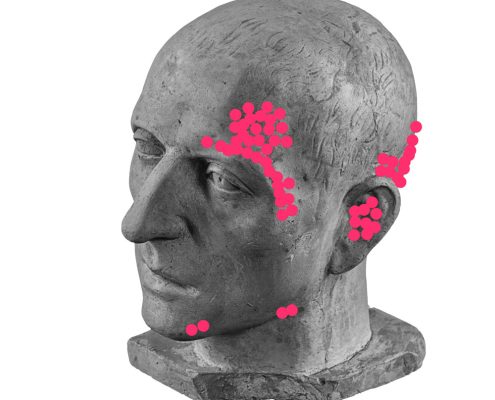
SternoCledioMastoid (SCM) muscle pain referral pattern
Temporalis
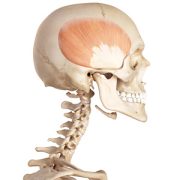
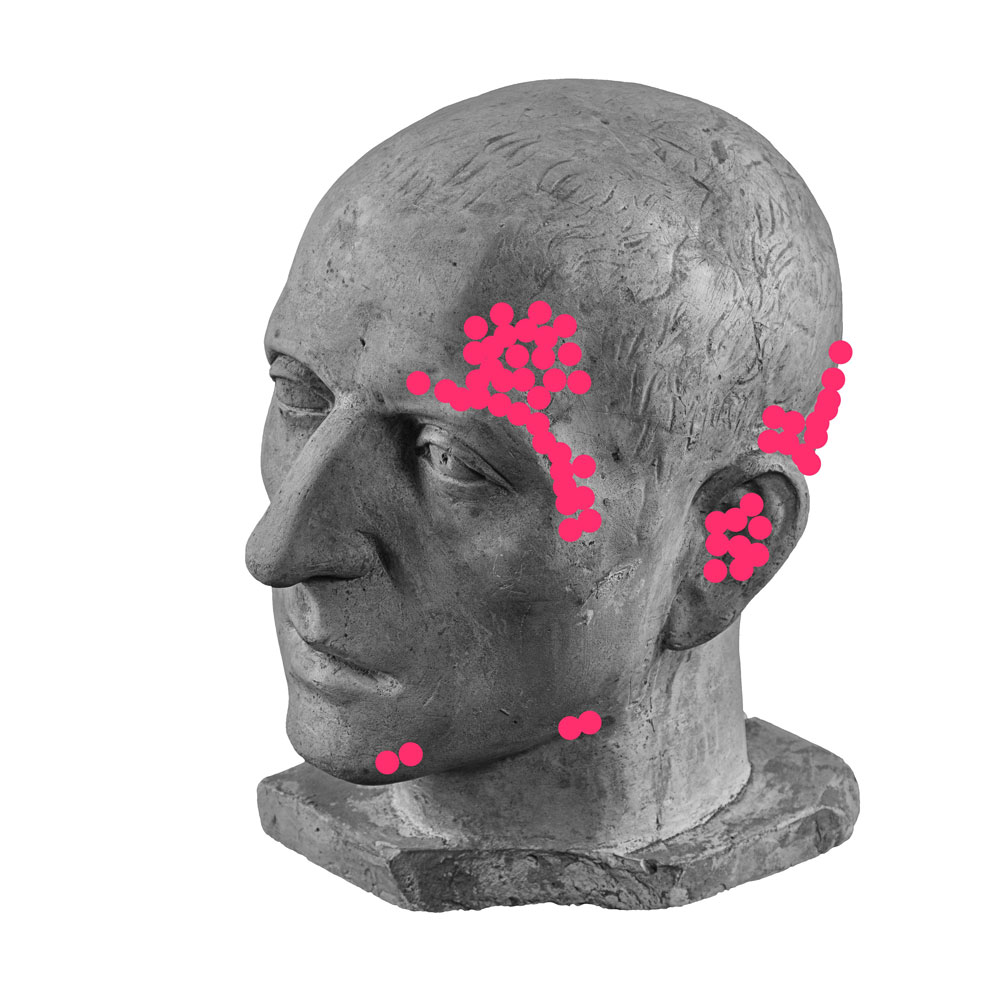
Imagine a big circle, diameter a couple of inches, situated further back on the head between (and slightly higher than) your eye and ear. This is the temporalis. It’s a big flat muscle responsible for chewing motion of jaw. If you chew gum or grind your teeth deactivating this muscle may help your headache. This is a tricky one to feel for as the muscle is so thin. It needs to be as its on the side of your head. Anyway, clamp your jaw down and try to feel for the contraction of the muscle. If you feel pain around this area and down into the jaw area and over the eyebrow you have found part of your problem
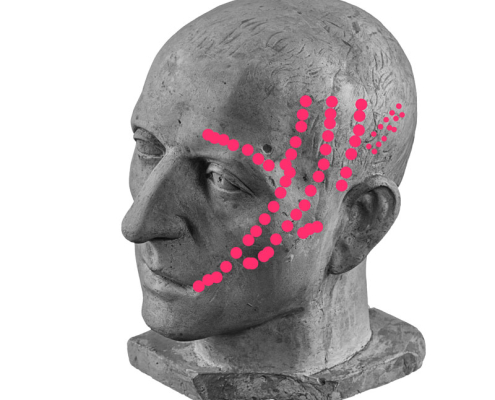
Temporalis pain referral pattern
Upper Trapezius
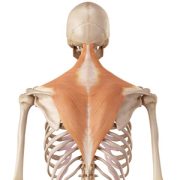
This is the triangle that bridges from your neck down to your shoulders. Its an important muscle for maintaining an erect posture. It helps to raise the shoulders when shrugging, laterally flex the neck (put ear onto the shoulder) and extends the neck (as in looking up). Pinch across the sloping ridge from neck to shoulder. This is tender on a lot of people. Upper trapezius headaches typically refer pain onto the eyebrow area on the front of the head. This is a muscle thats easy to feel for and easy to self massage.
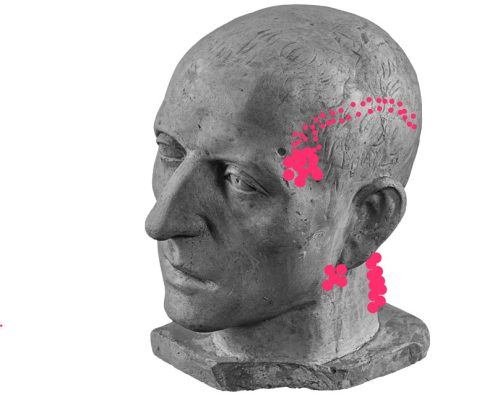
Upper trapezius pain referral pattern
Sub Occipitals
These muscles sit under the occiput (base of the skull at the back of the head). They are a group of muscles primarily responsible for rotating (turning) and extending (looking up into the sky) the head. Pain from these muscles typically refers pain forward between the level of the upper part of the ear and the eye in a band round the head. Reach back and have a feel under the skull at the back of the head. Be aware though that the back of the head is a congested area full of many other muscle insertions that could be causing a very different type of headache.
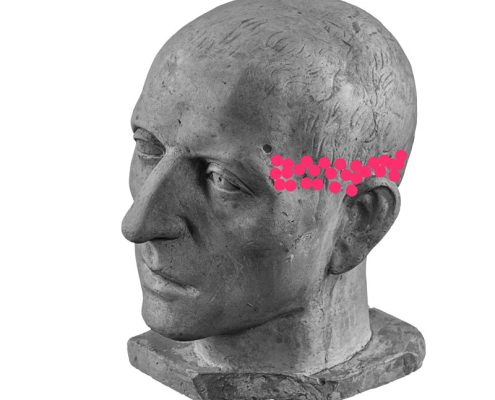
Sub-occipitals pain referral pattern
Superior Oblique
This muscle sits behind the eye and is responsible for moving the eye. Look up and to the outside of your head and you’ll be stretching this muscle. If doing this replicates your headache its likely you’ll need to start be being a bit kinder to your eyes. Pain from this muscle tends to be felt deep behind the eye.
This is by no means an exhaustive list and it also bear in mind that these muscles rarely work in isolation. Dysfunction in one muscle can affect other nearby muscles causing a propagation of pain. Acupuncture is great for treating tension headache. Book in for a free 15 minute consultation below.


Leave a Reply
Want to join the discussion?Feel free to contribute!